

The Agentic Commerce Playbook: Shopify Just Handed You the Keys to ChatGPT's 800M Users
Dedicated to the consumer company seeking to elevate intelligently.


Common Ground is Ground's newsletter highlighting the most important consumer news, tech trends, artificial intelligence, in-depth analysis, along with a few extra thoughts from our team. Subscribe today to get the latest issue delivered to your inbox.
Shopify launched Agentic Storefronts this week. One setup in your admin and your products become discoverable across ChatGPT, Perplexity, and Microsoft Copilot. But here’s what separates winners from wishful thinkers: clean data.
Remember when DTC brands dominated legacy retailers by mastering Facebook Ads early? When nimble operators could out-compete massive brands because they moved faster on a new distribution channel?
That moment is happening again. Right now.
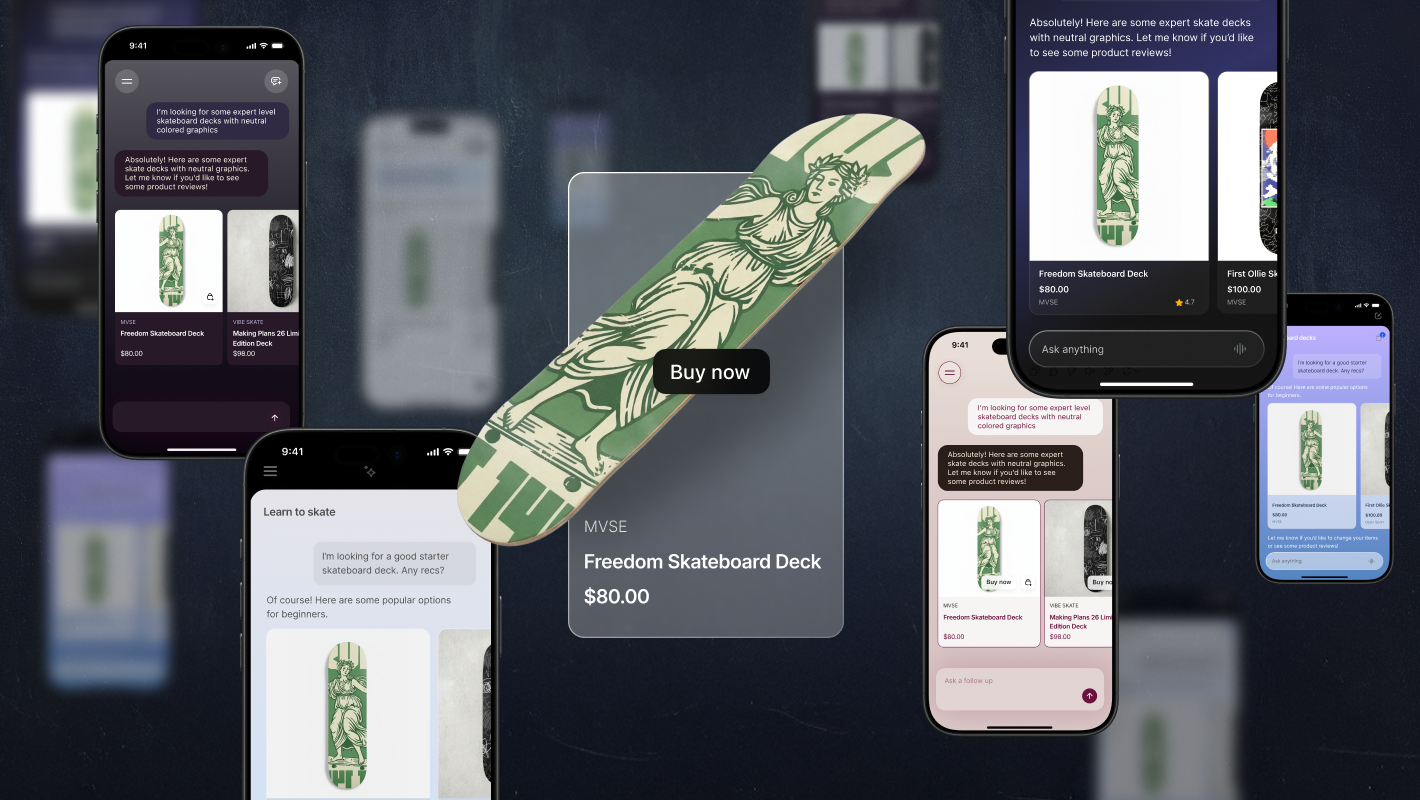
On December 10th, Shopify released Agentic Storefronts, making every Shopify store agent-ready by default. ChatGPT users can now discover your products, compare options, and complete purchases without leaving the chat. Orders flow back to your Shopify admin with full attribution tagged as “ChatGPT Instant Checkout.”
The window to establish organic placement is open. But it won’t stay that way forever.
What Is Agentic Commerce (And Why Shopify Just Changed Everything)?
Agentic commerce is when AI agents shop on behalf of customers by discovering, evaluating, and purchasing products with minimal human involvement.
Traditional Funnel: Awareness → Consideration → Intent → Nurture → Checkout
Agentic Funnel: Ask → Evaluate → Optimized Match → Checkout
The difference is dramatic. Instead of customers searching, scrolling, filtering, and comparing across multiple sites, they simply describe what they need. The AI agent does the research, evaluates options based on relevance and fit, and presents optimized matches ready for instant purchase.
Shopify’s announcement means that if you’re on their platform, you’re already eligible. No application needed. Just toggle on ChatGPT, Perplexity, and Microsoft Copilot in your admin.
But here’s the critical part: AI agents can only recommend what they can understand. And if your product data isn’t structured correctly, you’re invisible.
The Brands That Win Won’t Be the Loudest. They’ll Be the Cleanest.
AI agents don’t respond to marketing hype or brand storytelling. They respond to structured data, real-time inventory, and clear product information.
Shopify’s Agentic Storefronts work by syndicating your product catalog through their Shopify Catalog system. It infers categories, extracts attributes, consolidates variants, and clusters identical items so shoppers see only relevant and unique results.
But the system relies on you providing clean, structured data. You define your schema and group products by standard attributes and metafields so that agents accurately present your products in searches.
Think of it this way: if a customer asks ChatGPT for “organic cotton t-shirts in navy, size medium,” the AI needs to parse your product fields to match that query. If your data says “navy blue” in one place and “dark blue” in another, or if size information is inconsistent, the AI can’t confidently recommend your product.
This is why your product fields matter more than ever:
Be descriptive. Use keywords that match how customers actually search and ask questions. “Organic Cotton Crew Neck T-Shirt” beats “Men’s Tee #4587.”
Be consistent. If you call it “Medium” in one product and “M” in another, AI agents struggle to filter accurately. Standardize everything: sizes, colors, materials, dimensions.
Use complete metadata. Fill out every field Shopify provides. Material composition, care instructions, fit type, occasion, style attributes. These become the data points AI uses to match products to intent.
Keep imagery current and competitive. When your product appears alongside competitors in ChatGPT’s carousel, your images need to stand out. High-quality, consistent product photography isn’t just branding anymore. It’s discovery optimization.
If your product feed isn’t optimized, you simply won’t be surfaced. The brands that treat their backend data like their front-end marketing will dominate.
You Can Finally Track and Own AI-Referred Customers
Here’s what Shopify’s system solves: orders flow into your admin with full AI channel attribution. When someone buys through ChatGPT, you’ll see “ChatGPT Instant Checkout” as the source.
This solves one of agentic commerce’s biggest mysteries: where are these AI-referred customers actually coming from, and can you own that relationship?
With Shopify’s Agentic Storefronts, you can. Every order, every customer, flows into your admin just like any other channel. You maintain the merchant relationship. You control the post-purchase experience. You own the customer data.
The wave of AI-referred customers isn’t coming. It’s already here. And now, for the first time, you can actually measure and optimize for that traffic.
Why Ground’s Work Matters in This New Era
At Ground, this is exactly the moment we’ve been preparing brands for. Shopify gets you discovered on AI platforms. Ground ensures you convert and retain those customers once they arrive.
When AI agents drive qualified traffic to your site, you have one chance to prove they made the right recommendation. Our AI ensures that moment converts by:
Recognizing the specific intent they arrived with from their AI conversation
Personalizing their experience based on behavioral signals in real-time
Optimizing every interaction to match their expectations
Building retention strategies that turn that first purchase into a lasting relationship
The infrastructure Shopify is building for agentic storefronts is remarkable. But the real competitive advantage belongs to brands who can deliver experiences that justify those AI recommendations and keep customers coming back.

🔌 Ready to turn AI-referred traffic into loyal customers? Ground AI helps brands capture the customers that ChatGPT, Perplexity, and other AI platforms send your way. Book a demo to see how.
Your Agentic Commerce Readiness Checklist
This isn’t a future-state. Shopify Agentic Storefronts are live today. Here’s what you should do this week:
1. Audit Your Product Data Now
Go through your bestsellers and ensure every field is complete, consistent, and descriptive
If an AI agent had to explain your product based only on your product fields, would it have enough information?
Standardize sizing, color names, materials across all products
2. Enable Agentic Storefronts in Shopify Admin
Toggle on ChatGPT, Perplexity, and Microsoft Copilot
Start tracking where your AI-referred orders come from
Monitor which products are being discovered through AI platforms
3. Upload Brand Guidelines to Knowledge Base App
Track your policies, FAQs, and brand voice
Ensure agents have the right answers to key customer questions about your brand
Define how you want your brand presented in AI conversations
4. Optimize Product Descriptions for Natural Language
Update descriptions to match how customers actually ask questions
Include detailed variant information (size, color, material, gender)
Ensure return policies and shipping terms are clear and accessible
5. Monitor Your AI Attribution Data
Watch which products get traction on AI platforms
Identify patterns in AI-referred customer behavior
Optimize your top performers for even better discovery
The Early Mover Advantage
Every major distribution channel follows the same pattern: early adopters get organic reach, then it becomes pay-to-play as competition increases.
Facebook Ads. Google Shopping. Amazon. Instagram. TikTok Shop.
Agentic commerce is following the exact same path. Right now, you can establish organic placement based purely on product relevance and data quality. Six months from now? You’ll be competing with brands who’ve already established authority and figured out the optimization game.
Shopify just handed you the keys to ChatGPT’s 800 million weekly users, Perplexity’s growing audience, and Microsoft Copilot’s enterprise reach. The brands that act now will own distribution in the AI shopping era. The ones that wait will be scrambling to buy placement they could have earned for free.
Your products are about to compete side-by-side with alternatives in ChatGPT’s product carousels. Make sure your data gives you the best shot at being chosen.
The brands that move fast will own AI discovery in their categories. The ones that wait will watch competitors capture customers they could have had — simply because their data was cleaner.
Curated Intelligence
Introducing Shopify Agentic Storefronts: Sell your products everywhere AI conversations happen Read More
Google’s AI try-on feature for clothes now works with just a selfie Read More
Shopify Launches ‘Agentic’ Storefronts: What it Means For Fashion Read More
Disney signs deal with OpenAI to allow Sora to generate AI videos featuring its characters Read More
Finding Common Ground
The Ground community comes together sharing different stories, but common ground.
Terrific analysis of the Agentic Storefronts rollout. The parallel to early Facebook Ads adoption is apt - we're watching the same land-grab dynamics play out but in a fundamentally different discovery layer. What's underappreciated here is the data consistency requirement; so many DTC brands have product catalogs that are optimized for human browsing (aesthetic descriptions, creative variant naming) but totally unstructured for machine parsing. I saw this exact issue with a client whose "midnight blue" vs "navy" inconsistency tanked their Google Shopping performance back in the day. Same thing will happenhere, but faster since LLMs are even more sensitive to semantic drift.